Native American Flute - The love flute of the North American indigenous peoples

Many of us are familiar with the recorder. For most of us, it was probably the first instrument we came into contact with as children. Some had a real talent for it, diligently learned to read music, and played with joy. Others, however, still look back on that time with a slight sense of dread: tedious music reading, pressure from the music teacher or even from their own parents, who wanted their child to express themselves musically.
Fortunately, that wasn't quite the case for me. Nevertheless, I never really had a great talent for instruments or other musical activities. I made do with simply listening to music and enjoying it from others.
Almost two years ago, however, everything changed dramatically. I discovered a new instrument that I was able to learn almost effortlessly. The very first time I held it in my hands, I experienced a sense of accomplishment. No complicated technique, no reading music. Just me and this wonderful instrument, which now allows me to share the song of my heart with the world.
The Native American flute – also called the love flute (I'll explain why later 🙂) – has profoundly changed my life. It has shown me the way on my very personal journey to my music and to my heart.
So what do the familiar recorder and the NAF (Native American Flute) have in common? Honestly, not much. As already mentioned, no prior musical knowledge is needed to create beautiful, melodious tunes with it.
But where does this wonderful wind instrument actually come from? Flutes – or wind instruments in general – have existed for thousands of years. Archaeological finds are sometimes over 9,000 years old and are scattered across the globe. In many cultures, flutes were used for spiritual practices, ceremonies, and even courtship. They were often considered a link between the physical and the spiritual world.
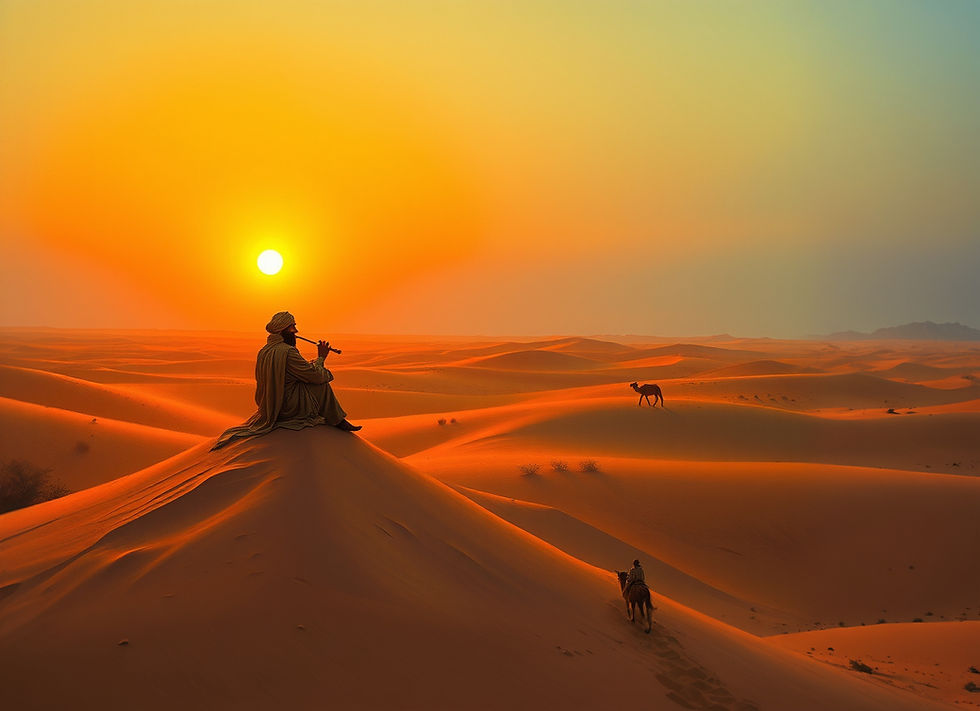
Now let's turn to the Native American flute. This flute is still played and celebrated by the indigenous peoples of North America today. According to available documentation, the "modern" NAF has been used by the indigenous peoples of North America since the 19th century. A young man who was interested in a woman would often have a very special flute made for him or build one himself and compose his own personal song for it. In the evening—often on a hill near the campsite—he would play this melody, which was intended solely for the woman he was courting.
Today, there are numerous talented flute makers who keep the tradition of the Native American flute alive. Over the years, this instrument has been continuously developed, so that it now exists in many different shapes, sizes, and scales.
But all these flutes have one thing in common with the original instrument to this day: They invite intuitive music-making and help many people to discover their own musical talent.

Comments